This is outrageous.
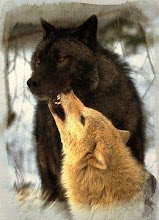
This winter, Cabela’s and Sportsmans Warehouse, two major outdoor retailers , sponsored predator derbies in Idaho where formerly protected wolves were targeted by contestants who vied to see who could kill the most wolves and other animals over a two-day period.
Worse, the entry fees for these brutal competitions were then funneled to support anti-wolf lawyers working to keep wolves in Greater Yellowstone off the endangered species list.
Wildlife-loving people fought too hard for too long to rescue wolves in the northern Rockies from the brink of extinction to silently tolerate corporate sponsorship of bloody competitions like this.
That’s why I’ve joined Defenders of Wildlife’s fight to get Cabela’s and Sportsman’s Warehouse to withdraw their support for predator derbies that target wolves, and I am hoping you will too.
Please sign the petition online at http://action.defenders.org/wolfderbies.
Thanks for helping…
Wednesday, February 10, 2010


Tuesday, January 5, 2010
1/5/10
It’s a new year for all of us, but 2010 could also be the year that we bring endangered jaguars back to the American Southwest where they belong.
Defenders is kicking off a new year of advocacy for the jaguar -- and we need your help to turn things around for these magnificent wild cats before it’s too late.
To jumpstart our efforts, we’re mounting an exciting grassroots campaign to raise awareness about the plight of the American jaguar and put public pressure on our leaders to make jaguar recovery a priority.
If you haven’t made your New Year’s resolution yet -- or simply want to do more for wildlife this year, please join other conservationists in Arizona, New Mexico and Texas who want to help bring jaguars back to their rightful home in the U.S. by signing up to be a part of our new citizen media team for jaguars -- Team Jag!
Despite their tropical associations, jaguars once lived in the American Southwest as far north as the Grand Canyon. Sadly, they were mostly killed off in the U.S. by the early 1900s and are considered endangered throughout their entire range (all the way down to Patagonia).
You might remember hearing about a well-known jaguar -- Macho B -- that had been spotted in Arizona for more than a decade. Though Macho B died last year, his memory is a powerful reminder of a time when jaguars were more plentiful, and a hopeful sign that -- with help from caring people like you -- they can and will return to their rightful home.
Under the Bush administration, the U.S. Fish and Wildlife Service (FWS) refused to write a recovery plan for American jaguars. But after Defenders took the government to court, a federal judge ruled that our jaguars deserve the full protection of the Endangered Species Act and ordered the FWS to reconsider its initial refusal to protect these incredibly rare cats.
While we await this new decision, the jaguar’s future hangs in the balance. That’s why we’re reaching out to you now, to ask you to make helping to restore jaguars one of your New Year’s resolutions in 2010.
Here's how it works: just click here to join Team Jag right now, and we’ll contact you when there’s an opportunity to build support for jaguar recovery in your community by writing a letter to the editor of your local newspaper or helping to be a voice for jaguars on the radio or online. It’s that simple.
Working together, we can help change the debate and put pressure on the federal government to make up for lost time -- and begin working to save jaguars from extinction now before it’s too late.
So what are you waiting for? Please join Team Jag today to give jaguars a tomorrow in the American Southwest.
For the Wild Ones,
Defenders is kicking off a new year of advocacy for the jaguar -- and we need your help to turn things around for these magnificent wild cats before it’s too late.
To jumpstart our efforts, we’re mounting an exciting grassroots campaign to raise awareness about the plight of the American jaguar and put public pressure on our leaders to make jaguar recovery a priority.
If you haven’t made your New Year’s resolution yet -- or simply want to do more for wildlife this year, please join other conservationists in Arizona, New Mexico and Texas who want to help bring jaguars back to their rightful home in the U.S. by signing up to be a part of our new citizen media team for jaguars -- Team Jag!
Despite their tropical associations, jaguars once lived in the American Southwest as far north as the Grand Canyon. Sadly, they were mostly killed off in the U.S. by the early 1900s and are considered endangered throughout their entire range (all the way down to Patagonia).
You might remember hearing about a well-known jaguar -- Macho B -- that had been spotted in Arizona for more than a decade. Though Macho B died last year, his memory is a powerful reminder of a time when jaguars were more plentiful, and a hopeful sign that -- with help from caring people like you -- they can and will return to their rightful home.
Under the Bush administration, the U.S. Fish and Wildlife Service (FWS) refused to write a recovery plan for American jaguars. But after Defenders took the government to court, a federal judge ruled that our jaguars deserve the full protection of the Endangered Species Act and ordered the FWS to reconsider its initial refusal to protect these incredibly rare cats.
While we await this new decision, the jaguar’s future hangs in the balance. That’s why we’re reaching out to you now, to ask you to make helping to restore jaguars one of your New Year’s resolutions in 2010.
Here's how it works: just click here to join Team Jag right now, and we’ll contact you when there’s an opportunity to build support for jaguar recovery in your community by writing a letter to the editor of your local newspaper or helping to be a voice for jaguars on the radio or online. It’s that simple.
Working together, we can help change the debate and put pressure on the federal government to make up for lost time -- and begin working to save jaguars from extinction now before it’s too late.
So what are you waiting for? Please join Team Jag today to give jaguars a tomorrow in the American Southwest.
For the Wild Ones,
Monday, December 28, 2009
Tue, 29 Dec 2009
News: National | Animals
A wildlife park is celebrating the arrival of one of the smallest kiwi born in captivity, but the tiny bird is not out of the woods yet.
The hatching this month of the chick affectionately nicknamed Piwi is the first successful hatching at Orana Wildlife Park in nine years.
While the little kiwi appears healthy and perky, it remains on the park's critical care list.
Park staff with no experience of a kiwi hatching had to get specialist advice over a speaker phone as they carefully removed layers of shell and membrane to help free the struggling chick.
"We experienced problems throughout the incubation and hatching process and feared for the chick's survival," said the head keeper of native fauna, Tara Atkinson.
"We considered it a miracle egg as at one stage we thought it had died."
Park staff said the chick had lost 25% of its body weight and could not afford to lose any more.
It now weighs about 170g.
Chicks normally lost weight for about 10 days before starting to gain weight.
Keepers are feeding Piwi twice a day and the rate of weight loss is decreasing.
The tiny chick was born with curled feet and staff had to apply splints to help to straighten them.
The splints have helped the chick's mobility and it motors around on its new legs.
News: National | Animals
A wildlife park is celebrating the arrival of one of the smallest kiwi born in captivity, but the tiny bird is not out of the woods yet.
The hatching this month of the chick affectionately nicknamed Piwi is the first successful hatching at Orana Wildlife Park in nine years.
While the little kiwi appears healthy and perky, it remains on the park's critical care list.
Park staff with no experience of a kiwi hatching had to get specialist advice over a speaker phone as they carefully removed layers of shell and membrane to help free the struggling chick.
"We experienced problems throughout the incubation and hatching process and feared for the chick's survival," said the head keeper of native fauna, Tara Atkinson.
"We considered it a miracle egg as at one stage we thought it had died."
Park staff said the chick had lost 25% of its body weight and could not afford to lose any more.
It now weighs about 170g.
Chicks normally lost weight for about 10 days before starting to gain weight.
Keepers are feeding Piwi twice a day and the rate of weight loss is decreasing.
The tiny chick was born with curled feet and staff had to apply splints to help to straighten them.
The splints have helped the chick's mobility and it motors around on its new legs.
Subscribe to:
Posts (Atom)